Interactive movies
Project under the supervision of Bernard Perron
This research project focused on the phenomenon of interactive cinema, more specifically on works that incorporate both filmed sequences and interactive elements. From the outset, it is interesting to note that what is considered the “first” interactive film, Raduz Cincera’s One Man and His World, was presented here in Canada at Expo 67 in Montreal. However, the rationale behind this research project goes much deeper than this simple geographical connection. Experiments in interactive cinema, at least in the field of popular entertainment, are becoming increasingly rare, and the genre is undeniably in decline today. Yet at the turn of the 1990s, the enthusiasm surrounding these experiments seemed to herald the arrival of a new genre with a promising future. The project was developed based on this historical observation: what could have caused this decline?
The project has helped to better define what distinguishes interactive cinema and to see how it has (dis)integrated into broader media fields. Thanks to documentary work, it has prevented a large body of works that have been classified (to varying degrees) as interactive films from quickly sinking into oblivion. Our research divided the phenomenon into three distinct categories: interactive film proper, film-games (more specifically associated with video games), and media arts, a practice as rich as it is diffuse. As a result, more than 421 works related to interactive cinema were identified and catalogued between 2004 and 2008. This research project led to the analysis of a multitude of works that, while admittedly “dated,” nevertheless provide an excellent opportunity to examine the major issues of contemporary interactive audiovisual culture (immersion, interactivity, narration, attraction, etc.).
Social Sciences and Humanities Research Council (SSHRC) Grant: «Le cinéma interactif des premiers temps» (2004-2008): «Le cinéma interactif des premiers temps» (2004-2008)
Research Assisants
- Dominic Arsenault (2005-2008)
- Martin Picard (2006-2008)
- Guillaume Roux-Girard (2007-2008)
- Carl Therrien (2005-2008)
Book Chapters and Periodicals
Perron, Bernard, and Simon Dor. 2014. “Addressing the Preservation of Gameplaying: Archiving Actional Modalities (Execution,Resolution, and Strategy).” In Bernard Perron and Federico Giordano (eds.), The Archives: Post-Cinema and Video Game Between Memory and the Image of the Present, p. 117-200. Milan: Mimesis International.
Perron, Bernard. 2013. “La sempiternelle attraction du cinéma interactif.” In Jean-Marie Dallet (ded.), Cinéma, interactivité et société, p. 61-81. Montrouge and Québec: Éditions Burozoïque and Presses de l’Université du Québec.
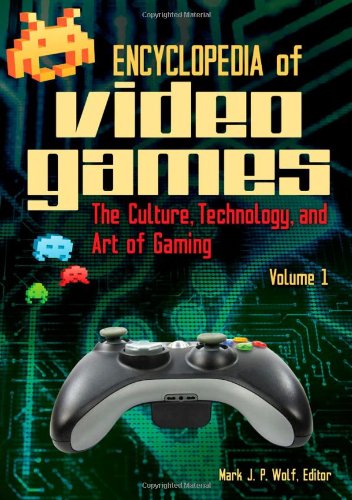
Perron, Bernard. 2012. “Interactive Movies.” In Mark J.P. Wolf (ed.), Encyclopedia of Video Games: The Culture, Technology, and Art of Gaming, p. 322-324. Westport: Greenwood Press.
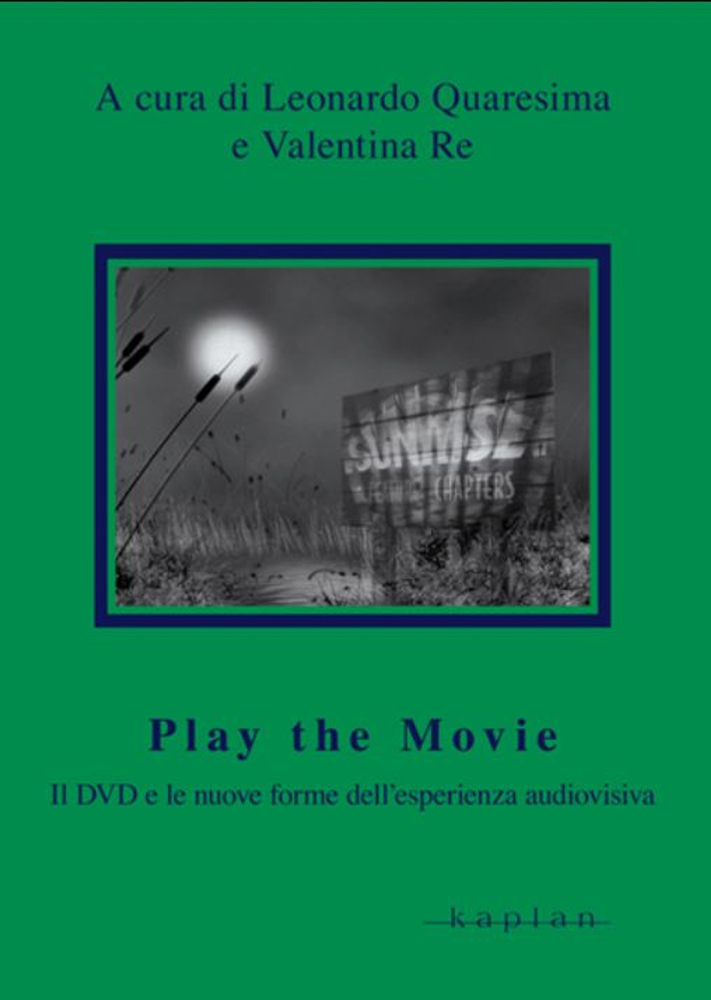
Perron, Bernard. 2010. “DVD et cinéma interactif.” In Leonardo Quaresima and Valentina Re (eds.), Play the Movie, Il DVD e le nuovo forme dell’esperienza audiovisia, p. 133-149. Turin: Kaplan.
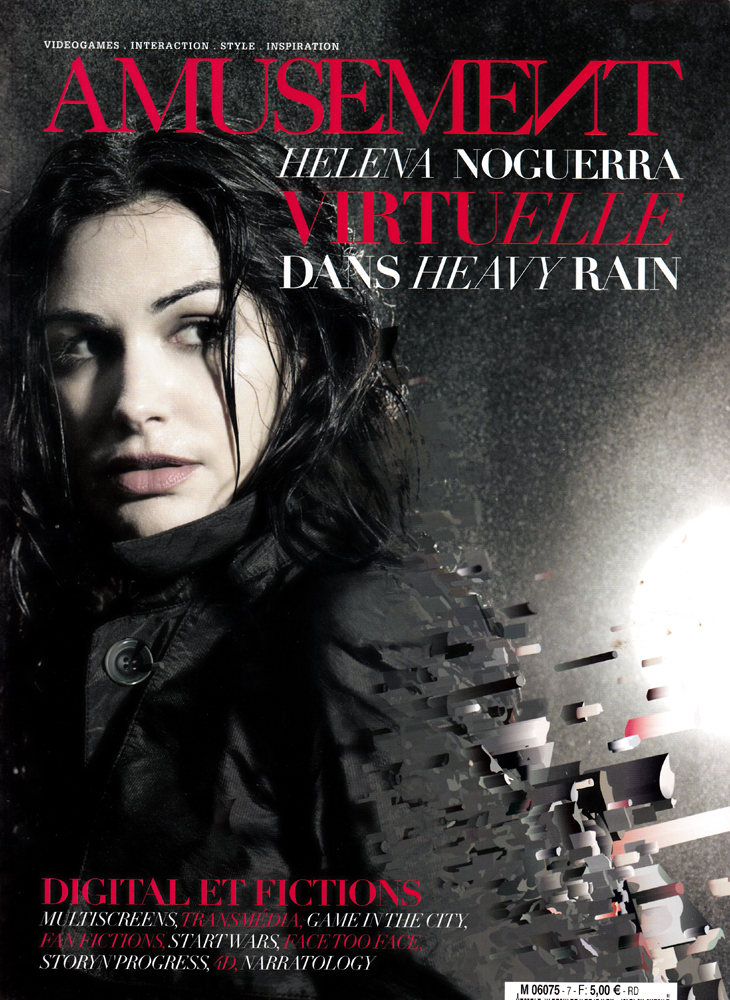
Perron, Bernard. 2010. “Videoplay”. Amusement, n° 7 (January-March), p. 198-199.
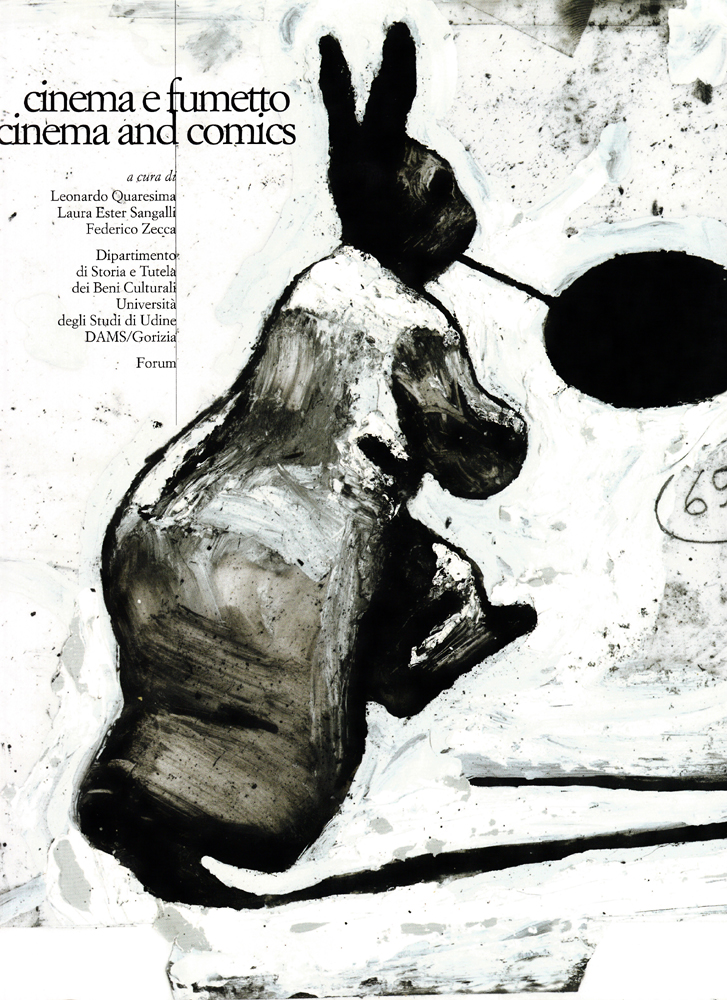
Perron, Bernard. 2009. “Entre bande dessinée, cinéma et fiction interactive : l’écran divisé du BDVD.” In Leonardo Quaresima and Laura Ester Sangalliet Federico Zecca (eds.), Cinema e Fumetto/Cinema and Comics, p. 609-626. Udine: Forum. [PDF]
Perron, Bernard, Dominic Arsenault, Martin Picard and Carl Therrien. 2008. “Methodological Questions in Interactive Film Studies.” New Review of Film and Television Studies, vol. 6, n° 3 (December), p. 233-252.
This article examines the phenomenon of interactive film. As a genre that has virtually disappeared, defined mainly by the abundant use of filmed video sequences (often referred to as Full-Motion Video or FMV) whose course can be influenced by the player, interactive cinema has left behind an impressive body of work that seems to have been forgotten. Through this research, we draw attention to the historical significance of this body of work that we call early interactive cinema. Beyond its cinematic qualities (which of course give it its name, and which probably led to its demise), our interest lies in its ergodic dimension, mainly in what we identify as figures of interactivity and action modalities.
Perron, Bernard. 2008. “Genre Profile: Interactive Movies.” In Mark J.P. Wolf (ed.), The Video Game Explosion: A History from Pong to PlayStation and Beyond, p. 127-133. Westport: Greenwood Press. [pre-publication PDF]
Therrien, Carl. 2008. “CD-ROM Games”. In Mark J.P. Wolf (ed.), The Video Game Explosion: A History from Pong to PlayStation and Beyond, p. 121-125. Westport Greenwood Press. [pre-publication PDF]
Perron, Bernard. 2007. “T’es où [Luc Courchesne]?.” Intermédialités, Jouer, n° 9 (Spring), p.156-175.
Perron, Bernard, and Carl Therrien. 2007. “>>Pointez-et-cliquez ici<< Les figures d’interactivité dans le cinéma interactif des premiers temps.” In Enrico Biasin, Giulio Bursi and Leonardo Quaresima (ed.), Film Style, p. 395-403. Udine: Forum. [PDF]
Other relevant publications
Aldred, Jessica. 2013. “‘I Am Beowulf! Now, It’s Your Turn’: Playing With (and as) the Digital Character in the Transmedia Franchise.” In Amy Herzog, John Richardson and Carol Vernallis (eds.), The Oxford Handbook of Sound and Image in Digital Media, p. 381-396. New York: Oxford University Press.
Perron, Bernard. 2003. “From Gamers to Players and Gameplayers: the Example of Interactive Movies.” In Mark J.P. Wolf and B. Perron (eds.), The Video Game Theory Reader, p. 237-258. New York: Routledge. [PDF]
Perron, Bernard. 2002. “Jouabilité, bipolarité et cinéma interactif.” In Denis Bachand and Christian Vanderdorpe (ed.), Hypertextes. Espaces virtuels de lecture et d’écriture, p. 285-311. Québec: Nota Bene. [PDF]
Un après-midi dans la pluie battante (Heavy Rain)
Ludiciné/GameCODE 2010 joint conference.
Aftermath Media
Designer of the interactive movies Tender Loving Care (1999) and POV (2001).
Beyond Interactive Cinema
Article by Birk Weiberg reporting on some experiences with interactive movies (2002).
Cause and Effect
Website of the Cause and Effect project, a hybrid theatrical performance/interactive movie.
Future Cinema
Exhibition of cinematographic, videographic, and computer installations that herald the cinema of tomorrow, held from November 2002 to March 2003.
Hyperbole Studios
Film-game designers, notably Quantum Gate (1993) and The X-Files Game (1998).
ICinema
Interactive Film Research Center at the University of New South Wales.
Interactive Cinema Group
MIT Interactive Cinema Research Group, directed by Gloria Davenport.
KinoAutomat
Project to recreate interactive cinema KinoAutomat (1967) on DVD, directed by Chris Hales.
Office Voodoo
Website of Michael Lew’s interactive movie Office Voodoo (2002), “an algorithmic film with real-time editing engine.”
Switching
Website of Morten Schjodt’s interactive DVD movie Switching (2003).
VirtualCinema
Creation tool developed by Hyperbole, used in particular for The X-Files Game (1998).
WaxWeb
Interactive online movie (also available on CD-ROM) developed by David Blair (1991).