Horror video games
Project under the supervision of Bernard Perron
Since the majority of video games relies on the notion of survival, horror video games – and more specifically survival horror games – could be seen as the video game genre par excellence. From the gothic novel to the stories of Poe, Lovecraft and King, from Hammer movies to the slasher trend, horror literature and cinema have sparked a lot of interest in the academic world, despite their “popular” aspect. By contrast, horror video games had only succeeded in catching the public’s interest, thanks to landmark series such as Resident Evil et Silent Hill. While game studies have soared since the end of the 1990s, few research projects had focused on a specific genre and few publications had taken horror video games into account. This project has remedied to the situation and provided the opportunity to explore the domain of horror video games through three parallel research avenues: history, transmedia exchanges, and the question of genre.
If the history of horror video games already existed in an implicit manner among the videoludic community, a thorough and thoughtful historical study had still not been made at the beginning of the project. An extensive and reasoned ludography has thus been developed in order to document the phenomenon (this database is available in the Documentation part of the LUDOV website). Corpus analysis led to a better comprehension of the influence of literature and cinema on horror video games. We were able to shed light on the specificity of video game horror strategies and the corresponding emotional implication of the player. Finally, the aesthetic and discursive notion of “genre” has been studied explored through an in-depth inspection of survival horror games.
Grant Social Sciences and Humanities Research Council Canada (SHRC): “From fictional fear to videoludic fear: a genre study of horror video games” (2008-2011)
Research Assistants
- Dominic Arsenault (2007-2011)
- Simon Dor (2009-2011)
- Andréane Morin-Simard (2009-2011)
- Martin Picard (2007-2011)
- Guillaume Roux-Girard (2007-2011)
- Carl Therrien (2007-2011)
– Database : Bibliographie du jeu vidéo d’horreur
– Database : Ludographie du jeu vidéo d’horreur
Books and periodicals
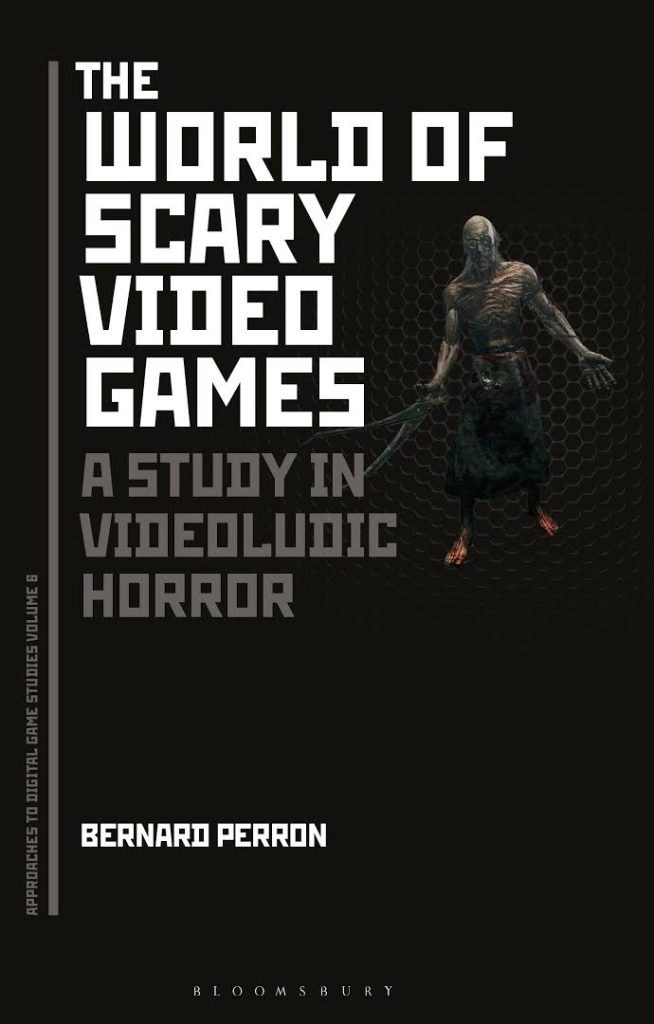
Perron, Bernard. 2018. The World of Scary Video Games: Study in Videoludic Horror. New York: Bloomsbury.
As for film and literature, the horror genre has been very popular in the video game. The World of Scary Video Games provides a comprehensive overview of the videoludic horror, dealing with the games labelled as “survival horror” as well as the mainstream and independent works associated with the genre. It examines the ways in which video games have elicited horror, terror and fear since Haunted House (1981). Bernard Perron combines an historical account with a theoretical approach in order to offer a broad history of the genre, outline its formal singularities and explore its principal issues. It studies the most important games and game series, from Haunted House (1981) to Alone in the Dark (1992- ), Resident Evil (1996-present), Silent Hill (1999-present), Fatal Frame (2001-present), Dead Space (2008-2013), Amnesia: the Dark Descent (2010), and The Evil Within (2014). Accessibly written, The World of Scary Video Games helps the reader to trace the history of an important genre of the video game. Chapter 2 analyzes very closely how the label came to crystallize a common cultural consensus around what horror video games were, and was taken up as a universal term to name quite different games. It shows how the understanding of and the references to survival horror have not been the same, on the one hand, for journalists and reviewers who have witnessed its advent and followed the releases of games, and on the other hand, for scholars who aim to theorize and discuss these games in relation to a larger media landscape. And the term is certainly not as potent to younger gamers.
Perron, Bernard. 2016. Silent Hill : le moteur de la terreur. Paris: Questions théoriques.
Perron, Bernard, Samuel Archibald and Antonio Dominguez Leiva (ed.). 2015. Z pour Zombies. Montréal: Presses de l’Université de Montréal.
Perron, Bernard, Samuel Archibald and Antonio Dominguez Leiva (ed.). 2013. Otrante. Poétiques du zombie, n° 33-34 (Winter), Paris: Editions Kimé.
Perron, Bernard, Richard Bégin and Lucie Roy (ed.). 2013. Figures de violence. Coll. “Esthétiques”, Paris: L’Harmattan.
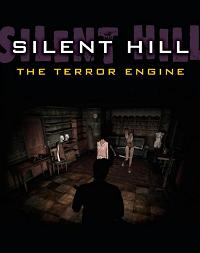
Perron, Bernard. 2012. Silent Hill: The Terror Engine. Ann Arbor: University of Michigan Press.
Silent Hill: The Terror Engine, second ouvrage de la série Landmark Video Games des directeurs Mark J.P. Wolf et Bernard Perron, propose un regard d’ensemble sur la série vidéoludique Silent Hill, en plus d’offrir une analyse approfondie de ses trois premiers opus. Silent Hill, dont le premier titre est paru en 1999, est l’une des séries les plus influentes du jeu vidéo d’épouvante. En scrutant l’histoire du genre et en comparant Silent Hill avec d’importants précurseurs tels qu’Alone in the Dark et Resident Evil, Perron inscrit les jeux dans le genre du survival horror. En adoptant une approche transmédiale et en soulignant les influences cinématographiques et littéraires du concepteur, l’auteur analyse la structure narrative, les techniques de mise en image, le son et la musique utilisés, les mécaniques ludiques et les émotions fictionnelles, artistiques et vidéoludiques suscitées par les jeux afin d’explorer les peurs spécifiquement associées au survival horror et de réfléchir à la manière par laquelle l’expérience, dans son ensemble, a fait de la série Silent Hill l’un des principaux monuments de l’histoire du jeu vidéo.
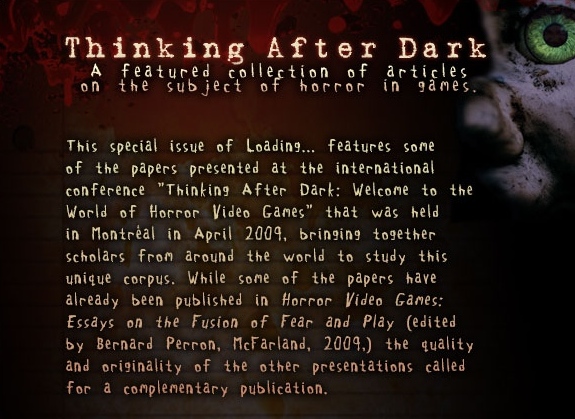
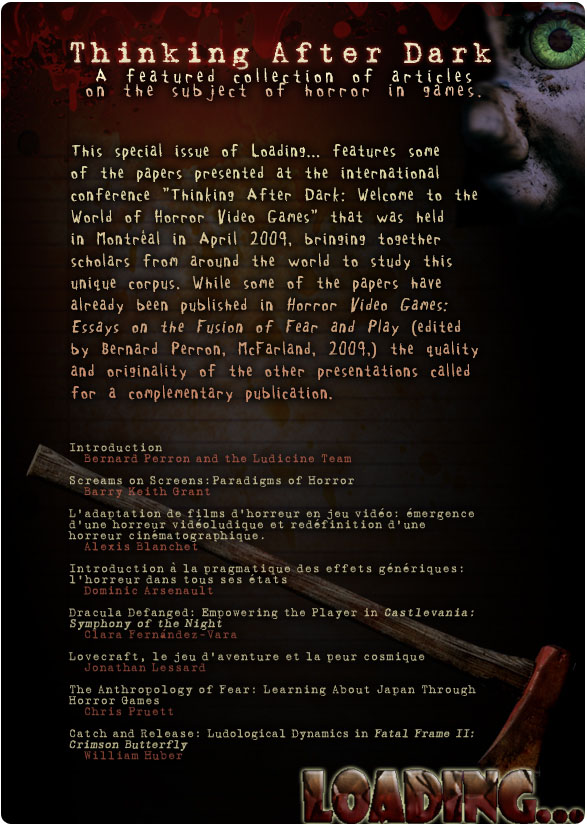
Perron, Bernard, Dominic Arsenault, Martin Picard, Guillaume Roux-Girard and Carl Therrien (ed.). 2010. “Thinking After Dark: Welcome to the World of Horror Video Games.” Loading… Journal of the Canadian Game Studies Association, vol. 4, n° 6, Special Issue (April). [Online]
Books Chapters and articles
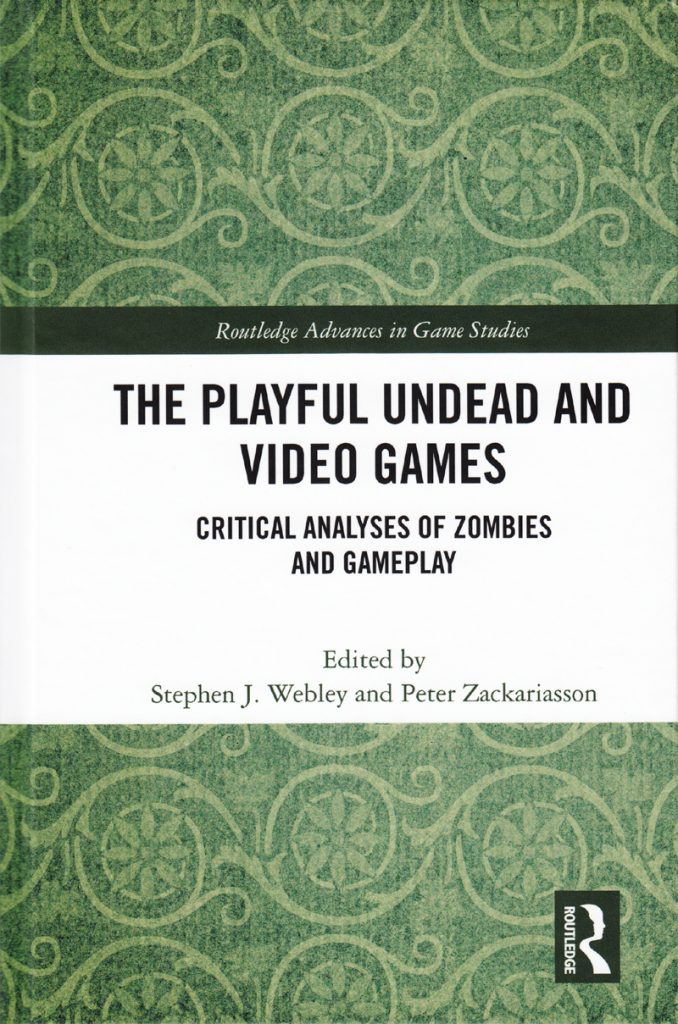
Perron, Bernard. 2019. “The Pace and Reach of Video Game Zombies.” In Stephen J. Webley and Peter Zackariasson (ed.), The Playful Undead and Video Games. Critical Analyses of Zombies and Gameplay, p.197-215. London: Routledge.
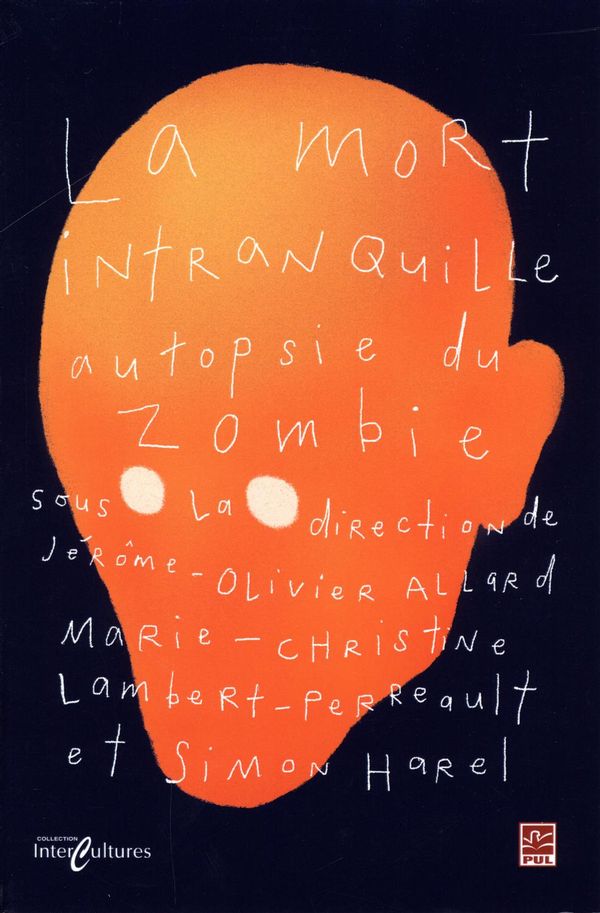
Perron, Bernard. 2019. “L’allure et la portée des zombies vidéoludiques.” In Marie-Christine Lambert-Perreault, Jérôme-Olivier Allard and Simon Harel (eds.), La mort intranquille: autopsie du zombie, p. 147-174. Quebec: Presses de l’Université Laval.
Perron, Bernard. 2018. “Les régimes effrayants de la vision vidéoludique.” In Selim Krichane (ed.), Décadrages, n° 29 (Fall), p. 8-29. [PDF]
Perron, Bernard. 2018. “Le jeu vidéo d’horreur : Quel cinéma !?” In Marion Poirson (ed.), CinémAction. Jeux vidéo et cinéma: une création, n° 168, p. 64-74.
Perron, Bernard, and Jean-Charles Ray. 2017. “Horror Video Games.” In Matt Cardin (ed.), Horror Literature through History: An Encyclopedia of the Stories that Speaks to our Deepest Fears, p. 121-125. Santa Barbara: ABC-CLIO.
Perron, Bernard. 2016. “Effrayantes aventures dans le champ aveugle du jeu vidéo et du cinéma d’horreur.” In Alexis Blanchet (ed.), Cinéma et jeux vidéo, p. 5-16. Paris: Questions Théoriques.
Perron, Bernard. [2005] 2016. “Coming to Play at Frightening Yourself: Welcome to the World of Horror Games.” In Mark J. P. Wolf (ed.), Video Games and Gaming Culture, vol. 3, p. 181-196. New York: Routledge.
Perron, Bernard. [2004] 2016. “Sign of a Threat: The Effects of Warning Systems in Survival Horror Games.” In Mark J. P. Wolf (ed.), Video Games and Gaming Culture, vol. 3, p. 435-454. New York: Routledge.
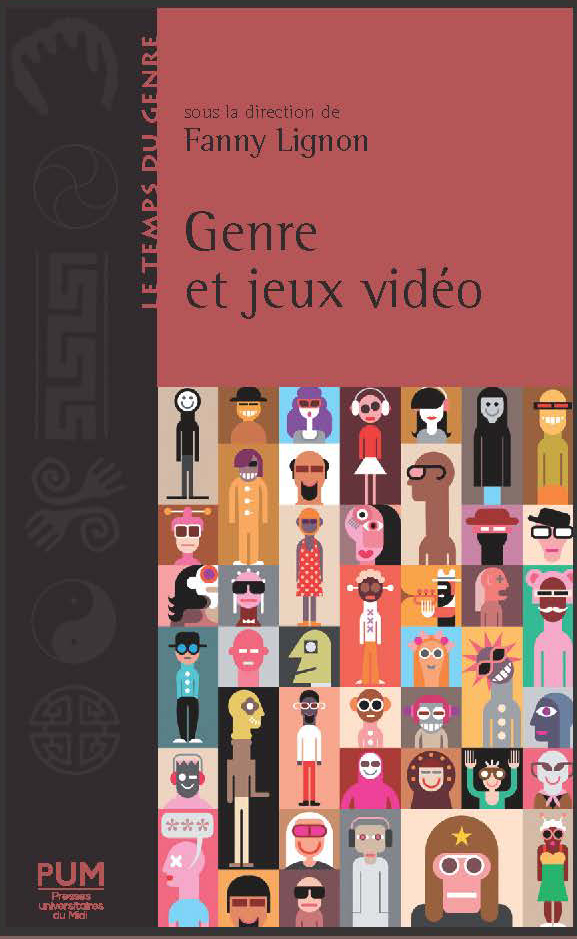
Perron, Bernard. 2015. “Le survival horror : un genre vidéoludique idéal pour une étude genrée.” In Fanny Lignon (ed.), Genre et jeux vidéo, p. 95-117. Toulouse: Presses Universitaires du Mirail.
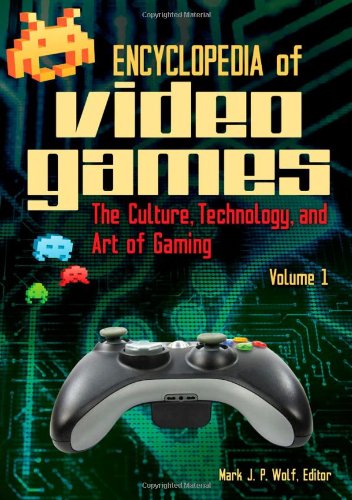
Perron, Bernard. 2012. “Survival Horror.” In Mark J.P. Wolf (ed.), Encyclopedia of Video Games: The Culture, Technology, and Art of Gaming, p. 636-639. Westport: Greenwood Press.
Perron, Bernard, and Guillaume Roux-Girard. 2012. “Entre synchronisation et action : son et violence dans les jeux vidéo d’horreur.” In Bernard Perron, Richard Bégin and Lucie Roy (eds.), Figures de violence, p. 81-91. Coll. “Esthétiques,” Paris: L’Harmattan.
Perron, Bernard, Richard Bégin and Lucie Roy. 2012. “Introduction : Figures de violence.” In Bernard Perron, Richard Bégin and Lucie Roy (ed.), Figures de violence, p. 7-11. Coll. “Esthétiques,” Paris: L’Harmattan.
Roux-Girard, Guillaume. 2011. “Listening to Fear: A Study of Sound in Horror Computer Games.” In Mark Grimshaw (ed.), Game Sound Technology and Player Interaction: Concepts and Developments, p. 192-212. Hershey: IGI Global. [PDF]
Perron, Bernard. 2010. “Fatal Frame ou la hantise vidéoludique.” Magazine électronique du Centre international d’art contemporain, n° 38 (November). [PDF]
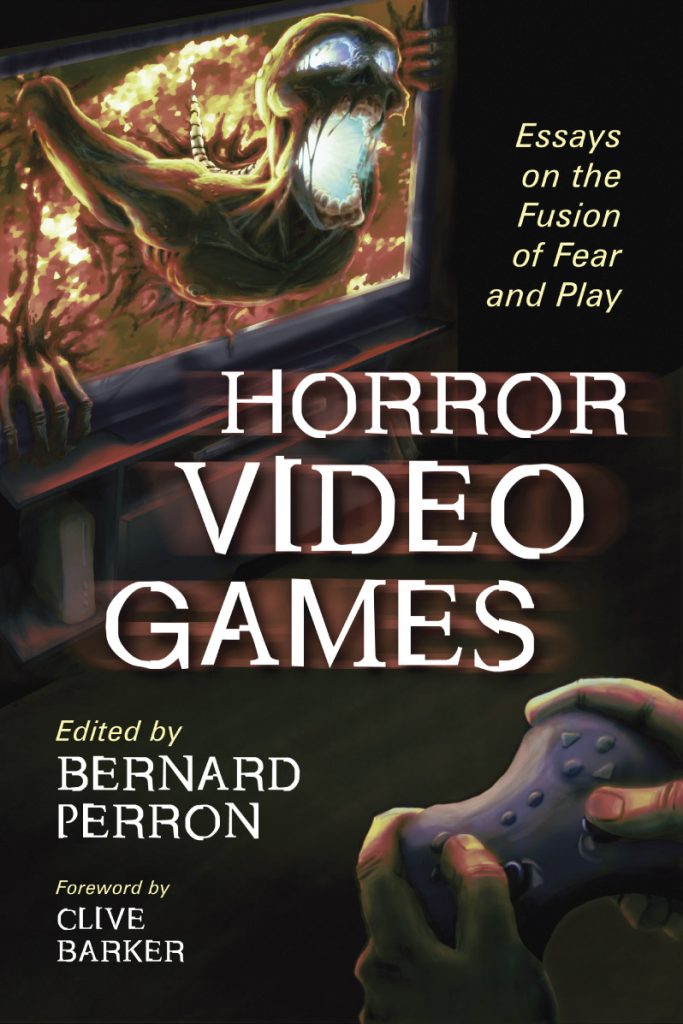
Perron, Bernard. 2009. “Introduction: Gaming After Dark.” In Bernard Perron (ed.), Horror Video Games: Essays on the Fusion of Fear and Play, p. 3-13. McFarland: Jefferson.
Perron, Bernard. 2009. “The Survival Horror: The Extended Body Genre.” In Bernard Perron (ed.), Horror Video Games: Essays on the Fusion of Fear and Play, p. 121-143. Jefferson: McFarland.
Picard, Martin. 2009. “Haunting Backgrounds: Transnationality and Intermediality in Japanese Survival Horror Video Games.” In Bernard Perron (ed.), Horror Video Games: Essays on the Fusion of Fear and Play, p. 95-120. Jefferson: McFarland.
Roux-Girard, Guillaume. 2009. “Plunged Alone into Darkness: Evolution in the Staging of Fear in the Alone in the Dark Series.” In Bernard Perron (ed.), Horror Video Games: Essays on the Fusion of Fear and Play, p. 145-167. Jefferson: McFarland.
Therrien, Carl. 2009. “Games of Fear. A Multi-Faceted Historical Account of the Horror Genre in Video Games.” In Bernard Perron (ed.), Horror Video Games: Essays on the Fusion of Fear and Play, p. 26-45. Jefferson: McFarland.
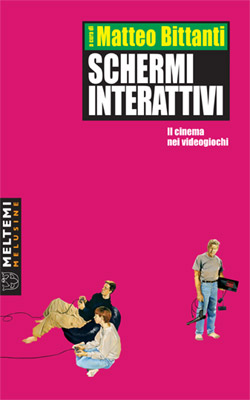
Perron, Bernard. 2008. “Dal film al gioco: l’esperienza forzata di paura.” In Matteo Bittanti (ed.), Schermi interattivi. Saggi critici su videogiochi cinema, p. 233-259. Rome: Meltemi.
Other relevant publications
Perron, Bernard. 2017. “Zombie Escape and Survival Plans: Mapping the Transmedial World of the Dead.” In Marta Boni (ed.), World Building. Transmedia, Fans, Industries, p. 215-230. Amsterdam: Amsterdam University Press.
Perron, Bernard, Samuel Archibald and Antonio Dominguez Leiva. 2015. “Introduction.” In Bernard Perron, Samuel Archibald and Antonio Dominguez Leiva (ed.), Z pour Zombies, p. 9-10. Montréal: Presses de l’Université de Montréal.
Arsenault, Dominic. 2010. “Introduction à la pragmatique des effets génériques : l’horreur dans tous ses états.” Loading… Journal of the Canadian Game Studies Association, vol. 4, n° 6. [Online]
Perron, Bernard. 2006. “The Heuristic Circle of Gameplay: the Case of Survival Horror.” In Dodo Santorineos (ed.), Gaming Realities: the Challenge of Digital Culture, p. 62-71. Confrerence proceedings of “Medi@terra 2006” (Athens, October). [PDF]
Building on a previous study examining the cognitive interactivity of viewers when watching a movie, this article examines the circularity at the heart of the gaming experience. Taking the survival horror genre, and more specifically the game Cold Fear, as a case study, it describes gaming activity as a heuristic circle. If, as Huizinga put it, playing a video game consists of entering a magic circle, it also involves being caught up in a magic cycle of questions and answers, analysis and implementation, entry and exit.
Perron, Bernard. 2006. “Quand le brouillard se dissipe : Silent Hill, le film.” Ciné-Bulles, vol. 24, n° 4 (Fall), p. 42-47. [PDF]
Perron, Bernard. 2005. “Coming to Play at Frightening Yourself: Welcome to the World of Horror Games.” Conference proceedings of “Aesthetics of Play. A Conference on Computer Game Aesthetics” (Bergen, 4-15 October 2005). [Online] [PDF]
From Haunted House (Atari, 1981) to Alone in the Dark (I-Motion Inc. & Infogrames/Interplay, 1992), Phantasmagoria (Sierra, 1995) and Resident Evil 4 (Capcom, 2005), this article examines how games have evolved from the perspective of their creators. Infogrames/Interplay, 1992), from Phantasmagoria (Sierra, 1995) to Resident Evil 4 (Capcom, 2005), this article examines how horror video games scare us, or rather, how they make us scare ourselves. Of course, it is impossible to ignore the remediation of film aesthetics and strategies. But although these links are important, it is above all what interactivity brings to the genre that is examined. A dark alley, a half-open door, a distant and unusual sound, or an encounter with a monster are not just fictional signs of horror; they are, above all, signals to act, leading to a gain or loss of control. For example, the flickering glow of the lamps and flashes of light in Haunted House or the beam of light from the torch in Silent Hill (Konami, 1998) not only contribute to creating a sinister atmosphere, they also constrain the player’s field of vision in order to heighten their sense of insecurity. The same is true of the framing in Resident Evil (Capcom, 1996). While a surprise effect can be as effective in a video game as in a film, in its video game form, it is triggered by the player’s movement. Consequently, the player’s potential for adaptation is at the heart of the horror and terror experience. Without forgetting the warning system previously studied (2004), it is now relevant to examine devices such as the Panic Meter in Clock Tower 3 (Capcom, 2003), which, as it fills up, makes the player character’s actions increasingly erratic – to the point where they no longer respond to the player’s commands – or the Sanity Meter in Eternal Darkness: Sanity’s Requiem (Silicon Knights/Nintendo, 2002), which, when it empties, strangely affects your player character, the game world, the television and the console.
Perron, Bernard. 2004. “Sign of a Threat: The Effects of Warning Systems in Survival Horror Games”. 4th Conference on Computation Semiotics, p. 132-141. Conference Proceedings of « COSIGN 2004 » (Split, September 14-16, 2004). [PDF]
This article examines how survival horror games are designed to frighten and terrify players. By comparing video games to films, the experiential state of the player to that of the viewer, and the shock of surprise to the tension of suspense, the author focuses on the effects of forewarning and the emotional reactions of players to survival horror games.
Thinking After Dark: Welcome to the World of Horror Video Games
International conference on the study of horror video games organized by Ludiciné.

Chris’ Survival Horror Quest
Database, reviews and discussion forum about horror video games.