Video game genres and discourse communities
Project under the supervision of Bernard Perron, Dominic Arsenault and Carl Therrien.
As we set out to compile a representative corpus of the most significant works in five major video game genres (first-person shooters, adventure games, role-playing games, platform games, and strategy games) in order to develop a history and theory of these genres, we were confronted with the disparity between the different corpora. Why, for example, were we prepared to exclude fan-made YouTube rankings from the outset, simply because they did not meet our rigorous criteria? Who were we, as video game researchers, to determine the canons of a particular genre?
As part of this research project, we addressed methodological and epistemological issues. We focused our study on four major “discursive communities”: fans and players, industry workers, critics and journalists, and academics. Our goal was to reflect on the discursive and interpretive strategies of each of these communities. We analyzed the use of different “communicative genres” (rankings, opinion pieces, essays, audiovisual reviews, etc.) to better show how these genres structure (consciously and sometimes unconsciously) the way in which members of a community share the same conception of a video game genre and, by extension, select the works that characterize it. We sought to define the modes of production, articulation, and dissemination of the discursive practices that delimit individuals’ imaginary conceptions of video game genres.
Ultimately, this research project aimed to advocate for open-mindedness, as it remains imperative to take into account the perspectives of different communities in order to understand the processes of crystallization of video game genres.
Social Sciences and Humanities Research Council of Canada Grant (SSHRC): “Video Game History as a Challenge to Video Game Theory: A Study of the Formal Aspects and Reception of Video Game Genres” (2013-2017)
Research Assistants
- Pierre-Marc Côté (2013-2015)
- Simon Dor (2013-2018)
- Mikaël Julien (2013-2016)
- Maxwell Landry-Martineau (2013-2015)
- Hugo Montembeault (2013-2018)
- Andréane Morin-Simard (2013-2018)
- Pascale Thériault (2015-2018)
Books and periodicals
Therrien, Carl, and Martin Picard. 2015. “Enter the bit wars. A study of video game marketing and platform crafting in the wake of the TurboGrafx-16 launch.” New Media & Society, vol. 18, n° 10 (29 April), p. 2323-2339. [Online]
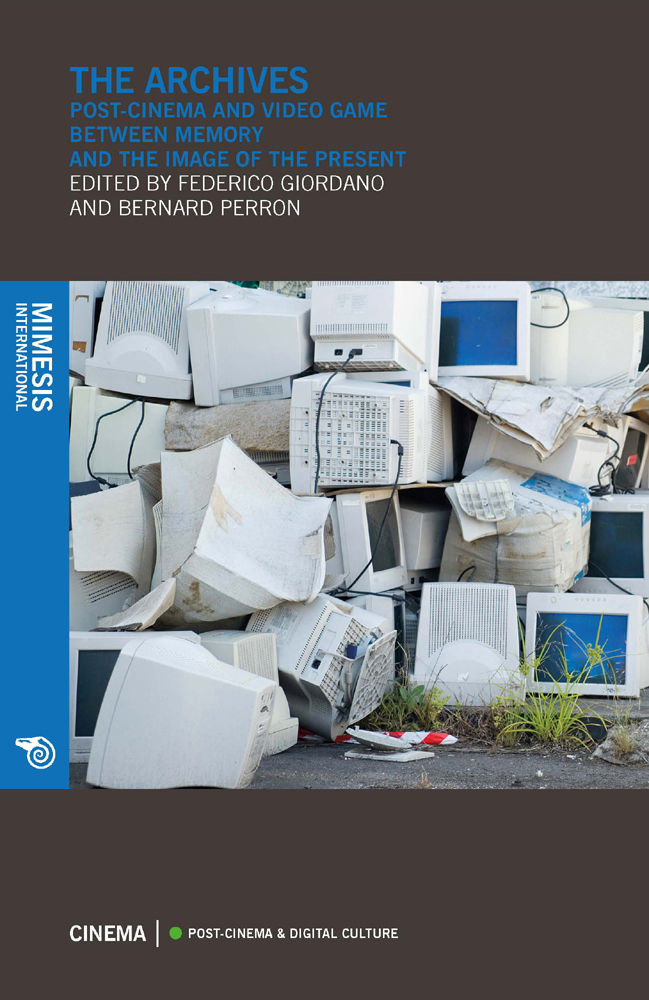
Perron, Bernard, and Simon Dor. 2014. “Addressing the Preservation of Gameplaying: Archiving Actional Modalities (Execution, Resolution, and Strategy).” In Bernard Perron and Federico Giordano (ed.), The Archives: Post-Cinema and Video Game Between Memory and the Image of the Present, p. 177-200. Milan: Mimesis International.
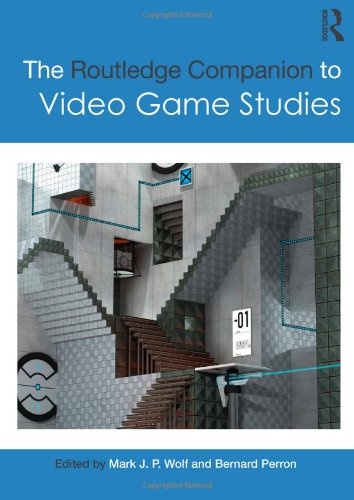
Arsenault, Dominic. 2014. “Action.” In Bernard Perron and Mark J.P. Wolf (ed.), The Routledge Companion to Video Game Studies, p. 223-231. New York and London: Routledge.
This essay describes two different phenomena: action games, understood as a genre of games in which the player’s sensori-motor skills prevail over his cognitive activity, and a general theory of action-taking in context of the game-playing practice. Through a short history of the main genres and sub-genres traditionally identified with “Action games”, and the conclusion that such a categorization pertains to a mode of action rather than a given genre, the properties of action games are identified as involving a standardized repertoire of actions, emphasis on sensori-motor skills, and short-term action sequences.
Book chapters and articles
Deslongchamps-Gagnon, Maxime, and Hugo Montembeault. 2019. “The Walking Simulator’s Generic Experiences.” Press Start vol. 5, no. 2, p. 1-28. [Online]
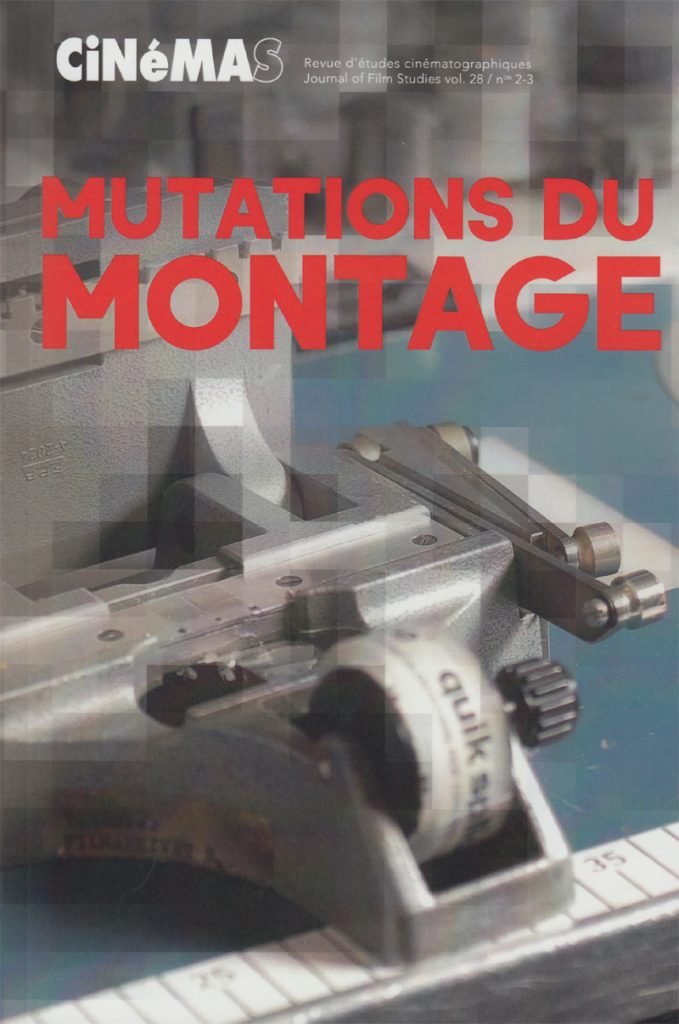
Montembeault, Hugo, Maxime Deslongchamps-Gagnon et Bernard Perron. 2018. “Le jeu vidéo et la notion de montage : se “couper” du cinémato-centrisme.” In Santiago Hidalgo and Bernard Perron (ed.), Cinémas (Montréal), Mutations du montage. Esthétiques, technologies, pratiques et discours, vol. 28, n° 2-3, p. 133-154.
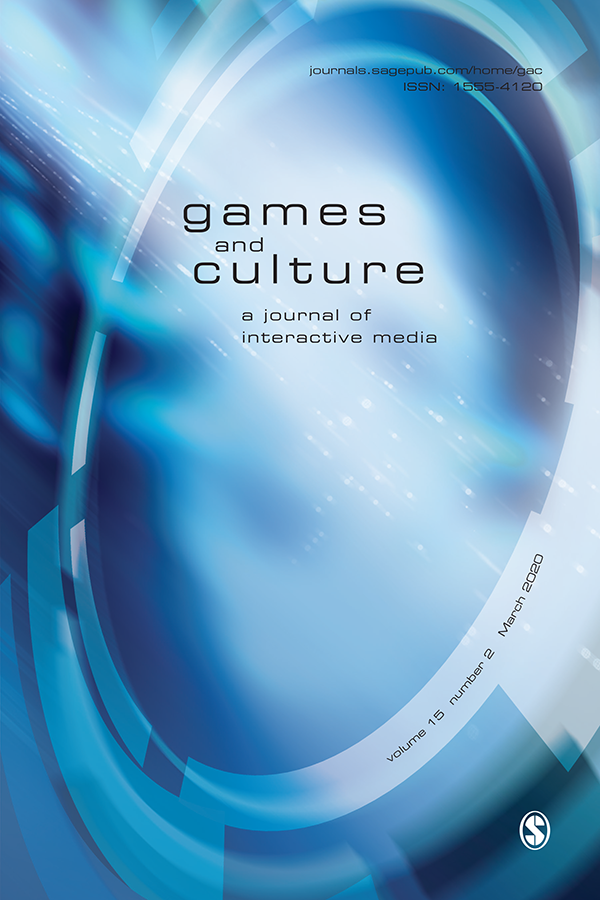
Therrien, Carl, Isabelle Lefebvre and Jean-Charles Ray. 2019. “Toward a Visualization of Video Game Cultural History: Grasping the French Touch.” Games and Culture: A Journal of Interactive Media. [Online]
Perron, Bernard, Hugo Montembeault, Andréane Morin-Simard, Jean-Charles Ray and Pascale Thériault. 2019. “Introduction : Splendeur(s) et misère(s) des genres vidéoludiques.” Kinephanos, Special Issue (May), p.1-8. [Online]
Perron, Bernard, Hugo Montembeault, Andréane Morin-Simard and Carl Therrien. 2019. “The Discourse Community’s Cut: Video Games and the Notion of Montage.” In Jeff Thoss and Michael Fuchs (ed.), Intermedia Games—Games Inter Media, p. 37-68. New York: Boolmsbury.
Perron, Bernard. 2018. “‘You have once again entered the world of survival horror. Good luck!’.” The World of Scary Video Games: Study in Videoludic Horror, p. 31-65. New York: Bloomsbury.
Other relevant publications
Montembeault, Hugo, and Simon Dor. 2018. “À quoi pensent les archives de la jouabilité? Une approche historiographique de l’expérience vidéoludique.” Conserveries mémorielles, no 23. [Online]
Dor, Simon. 2018. “Strategy in Games or Strategy Games: Dictionary and Encyclopaedic Definitions for Game Studies.” Game Studies, vol. 18, no 1. [Online]
Perron, Bernard. 2014. “Conventions.” In Bernard Perron and Mark J.P. Wolf (ed.), The Routledge Companion to Video Game Studies, p. 74-82. New York: Routledge.
Arsenault, Dominic. 2011. “Des typologies mécaniques à l’expérience esthétique. Fonctions et mutations du genre dans le jeu vidéo.” Unpublished doctoral thesis, Bernard Perron (ed.), Université de Montréal. [Online]
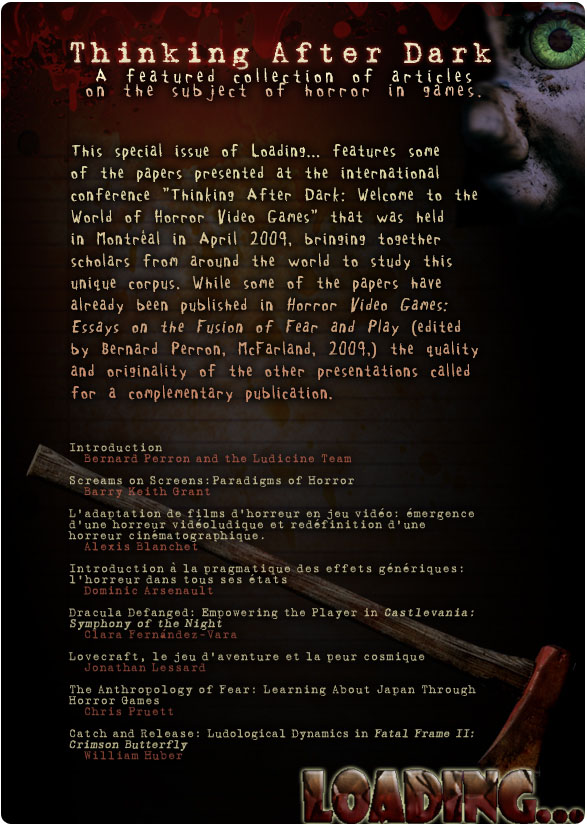
Arsenault, Dominic. 2010. “Introduction à la pragmatique des effets génériques : l’horreur dans tous ses états.” Loading…Journal of the Canadian Game Studies Association, vol. 4, no 6. [Online]
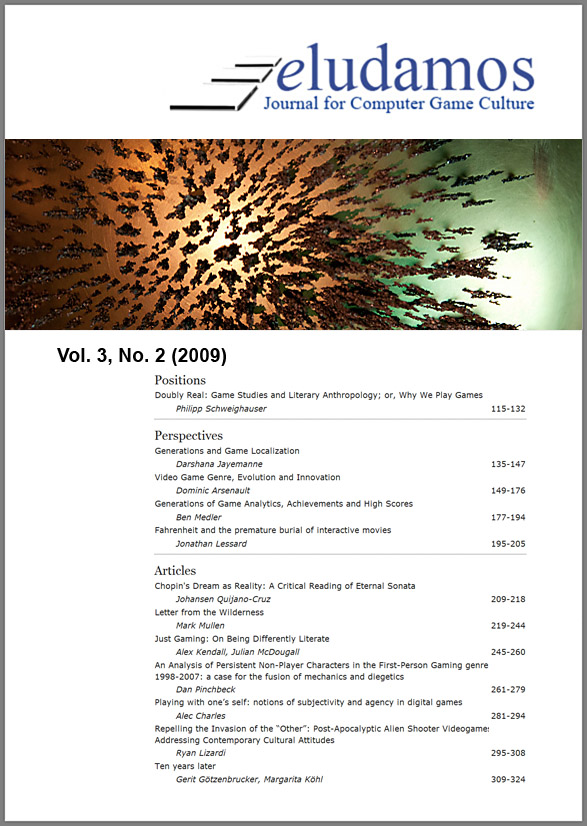
Arsenault, Dominic. 2009. “Video Game Genre, Evolution and Innovation.” Eludamos. Journal for Computer Game Culture, vol. 3, no 2. [Online]
Examining the usage of video game genre labels through a brief survey of a few generic taxonomies will reveal multiple different ways of organizing them according to a multitude of criteria. If we accept genre to be a fruitful model to identify the multiple kinds of video games that are out there, we have to account for its transformations, adaptations and reinventions. Admitting genre evolution requires us to properly address the topic of innovation that lies at its basis. Consequently, a model of innovation specific to the video game industry has to be devised. Such a model will reveal that, far from being reducible to a simple checklist of specific game mechanics, video game genres play the part of the middle-man in a complex ecosystem of functional considerations and aesthetic ideas.
Deslongchamps-Gagnon, Maxime, and Hugo Montembeault. 2018. “Cartographier les effets génériques du walking simulator au-delà du genre : Les cas de The Long Dark et de Kona.” Conference proceedings of the “Journée d’études LUDOV 2.0” (Montréal, June 13, 2018), Université de Montréal.
Deslongchamps-Gagnon, Maxime, and Hugo Montembeault. 2018. “Profil Ludique et LUDOV : Portrait d’une synergie.” Conference proceedings of the “Symposium des laboratoires universitaires de recherche francophone en études du jeu et de la ludification” (Montréal, May 14-16, 2018), Université du Québec à Montréal; Université de Montréal; École des arts numériques, de l’animation et du design; Université du Québec en Abitibi-Témiscamingue.
Montembeault, Hugo. 2017. “Repenser l’histoire “condamnée” du FPS.” Splendeur(s) et Misère(s) des Genres (vidéo)ludiques. Conference proccedings of the “Symposium Annuel Histoire du Jeu 2017” (Montréal, June 28-30, 2017), Bibliothèque et Archives nationales du Québec.
Morin-Simard, Andréane, and Hugo Montembeault. 2016. “The Discourse Community’s Cut: Video Games and the Notion of Montage.” Energizing Communities / L’énergie des communautés. Conference proceedings of “Association Canadienne d’études cinématographiques / Film Studies Association of Canada (FSAC 2016) – Congress of the Humanities and Social Sciences” (Calgary, May 31 – June 2, 2016), Université de Calgary.
Therrien, Carl, and Hugo Montembeault. 2015. “The Authority of Discourse Communities. Disseminating Techno-Industrial Glorification from Marketers to Academics.” Diversity of Play: Games – Cultures – Identities. Conference proceedings of “Digital Games Research Association (DIGRA 2015)” (Lüneburg, May 14-17, 2015), Leuphana University.
Morin-Simard, Andréane, Hugo Montembeault, Bernard Perron and Guillaume Roux-Girard. 2015. “Les genres vidéoludiques au cœur de l’imaginaire des communautés discursives.” Les Imaginaires de la Communauté. Conference proceedings of the “Colloque international FIGURA RADICAL” (Montréal, March 5, 2015), Université du Québec à Montréal.
Perron, Bernard, Dominic Arsenault, Hugo Montembeault, Andréane Morin-Simard and Guillaume Roux-Girard. 2014. “Video Game History as a Challenge to Video Game Theory: A Study of the Formal Aspects and Reception of Video Game Genres.” Borders without Boundaries. Conference proceedings of “Association Canadienne des études vidéoludiques / Canadien Game Studies Association (CGSA 2014) – Congress of the Humanities and Social Sciences” (St. Catharines, May 29, 2014), Brock University.
Montembeault, Hugo, and Carl Therrien. 2014. “Négocier le First-Person Shooter : Exemplification méthodologique.” Atelier sur les Jeux Vidéo. Conference proceedings of “Centre de recherche Interdisciplinaire sur les Technologies Émergentes de l’Université de Montréal (CITÉ 2014)” (Montréal, March 21, 2014), Université de Montréal.